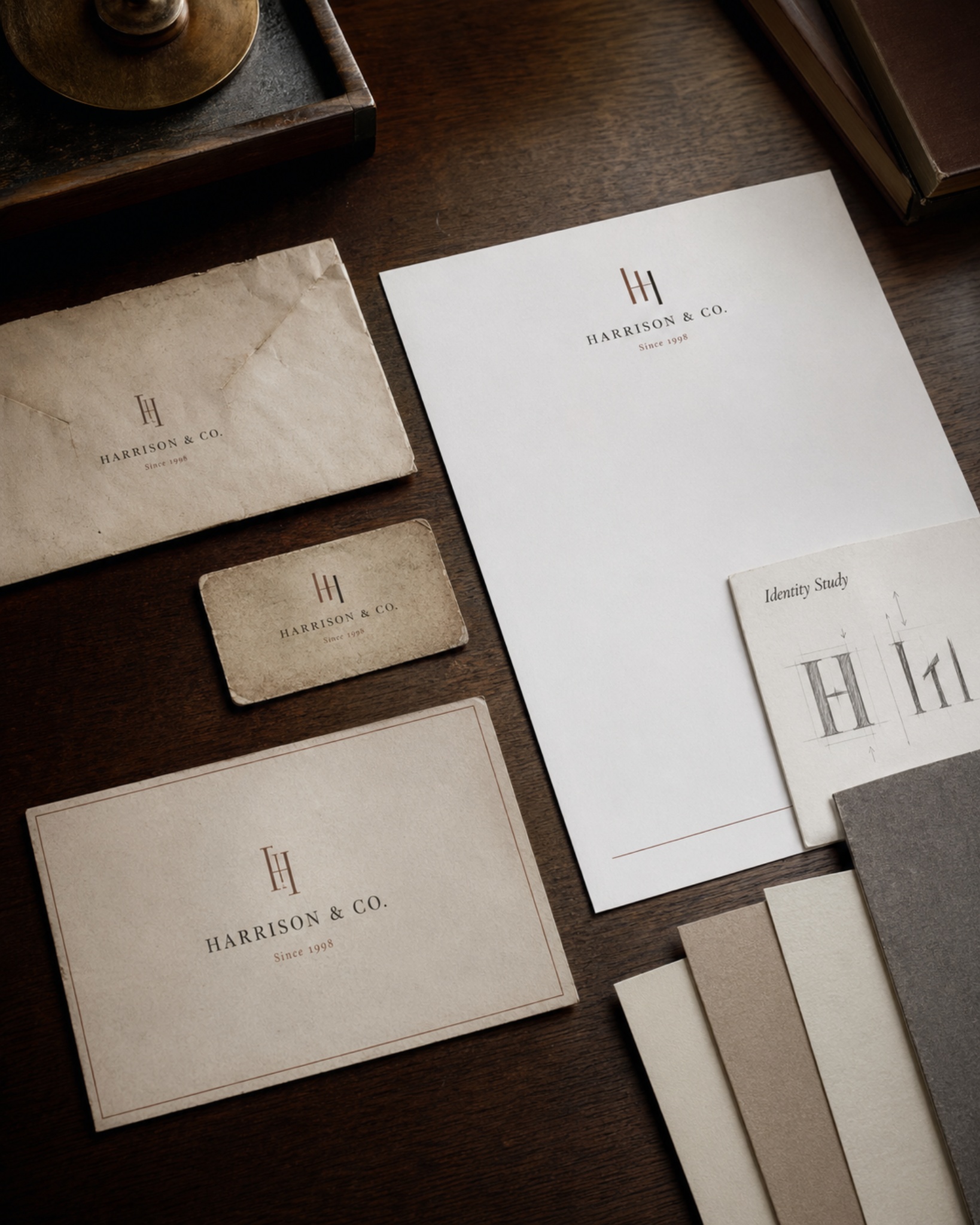
What Modernizing Actually Means
There is a widespread misunderstanding about what it means to update a brand.
Many business owners assume it means starting over. New name. New colors. New logo. New everything. A complete break from what came before.
That is one kind of rebrand. It exists, and sometimes it is necessary — usually when a business has pivoted significantly, or when the existing identity has become genuinely harmful to growth.
But for most established businesses, that is not what a thoughtful identity refresh looks like. The stronger path is usually refinement: taking what already works and making it more precise, more consistent, more reflective of where the business actually is.
This is different from reinvention. It is refinement. And the distinction matters enormously.
What Gets Carried Forward
When a business has earned trust over time, certain elements of its identity become part of that trust. A mark that clients recognize on a vehicle or storefront. A color that has appeared consistently for years. A way of presenting the business name that feels familiar to a community.
These elements are not sacred in the sense that they can never change. But they are significant — and a thoughtful identity refresh starts by understanding which ones are doing real work.
Sometimes it is the mark itself. The overall shape or letterform that appears on trucks, on buildings, on uniforms — and that people have come to associate with reliability.
Sometimes it is the color. A business that has used the same green for twenty years has built a visual shorthand with its audience.
Sometimes it is the name itself, or how it is presented. The hierarchy. The way it appears across different contexts.
Good modernization works through this kind of precision. It identifies what is valuable and what is simply old — and it carries the former forward while replacing the latter.
The Risk of Holding Too Still
There is another risk that does not get discussed as often as the fear of changing too much.
It is the risk of not changing enough.
Businesses that hold their identity completely still, year after year, face a different kind of problem. The world around them keeps shifting. Design standards evolve. Competitors update. Consumer expectations change. And slowly, the business begins to look like it belongs to a different era.
In a market where perception shapes trust before the first conversation, looking outdated carries a real cost. Not immediately — established relationships buffer this — but over time, in the clients who never call, and in the referrals that go elsewhere.
The businesses that modernize thoughtfully — not chasing every visual trend, but staying considered and current — protect their ability to compete for the next stage of growth, not just maintain the last.
What Clients Actually Notice
Clients, especially loyal ones, rarely notice a thoughtful identity refresh the way a business owner fears they will.
They do not call to say the logo changed. They do not leave because the colors are slightly different. What they notice is feeling — whether the business feels more or less like the business they trust.
When a refresh is done well, the most common response from existing clients is quiet approval. The kind of reaction that says: yes, this feels right. This is where we expected you to be.
When a refresh is done badly — when the change feels arbitrary, disconnected from the business's history, or chosen to chase a trend — that is when clients notice. That is when the business feels like it has changed.
The difference is not whether to change. The difference is whether the change honors what has already been built.
A Framework for Thinking It Through
Before beginning any identity refresh, there are a few questions worth sitting with honestly.
What parts of our current identity do clients actually recognize — and do they associate that recognition with something positive?
What parts of our identity no longer reflect the quality, scale, or character of the business as it exists today?
Are we hesitating because of genuine concern about recognition — or because change itself feels uncomfortable?
What would we want a new client to think when they first encounter our brand? Does the current identity make that impression?
These questions do not have automatic answers. But they create the right conditions for a decision that is made thoughtfully, not reactively.
The Next Chapter Does Not Begin by Erasing the Last One
A business that has been building for decades has something that cannot be manufactured quickly: a record. A history. A reputation earned through actual work.
The goal of a considered identity refresh is not to leave that history behind. It is to bring it forward — cleaned up, aligned, and ready for what comes next.
The work that has been done deserves a visual language that reflects it.
Not a new persona. Not a costume. Not a break from the past.
A clearer, more honest representation of what the business has actually become.