The Gap Between What a Business Is and How It Appears
There is a specific kind of tension that builds inside a business when its identity has not kept pace with its growth. The people inside the company understand the quality of the work. They have watched it improve year by year.
The people outside the company have no way of knowing any of that — not at first.
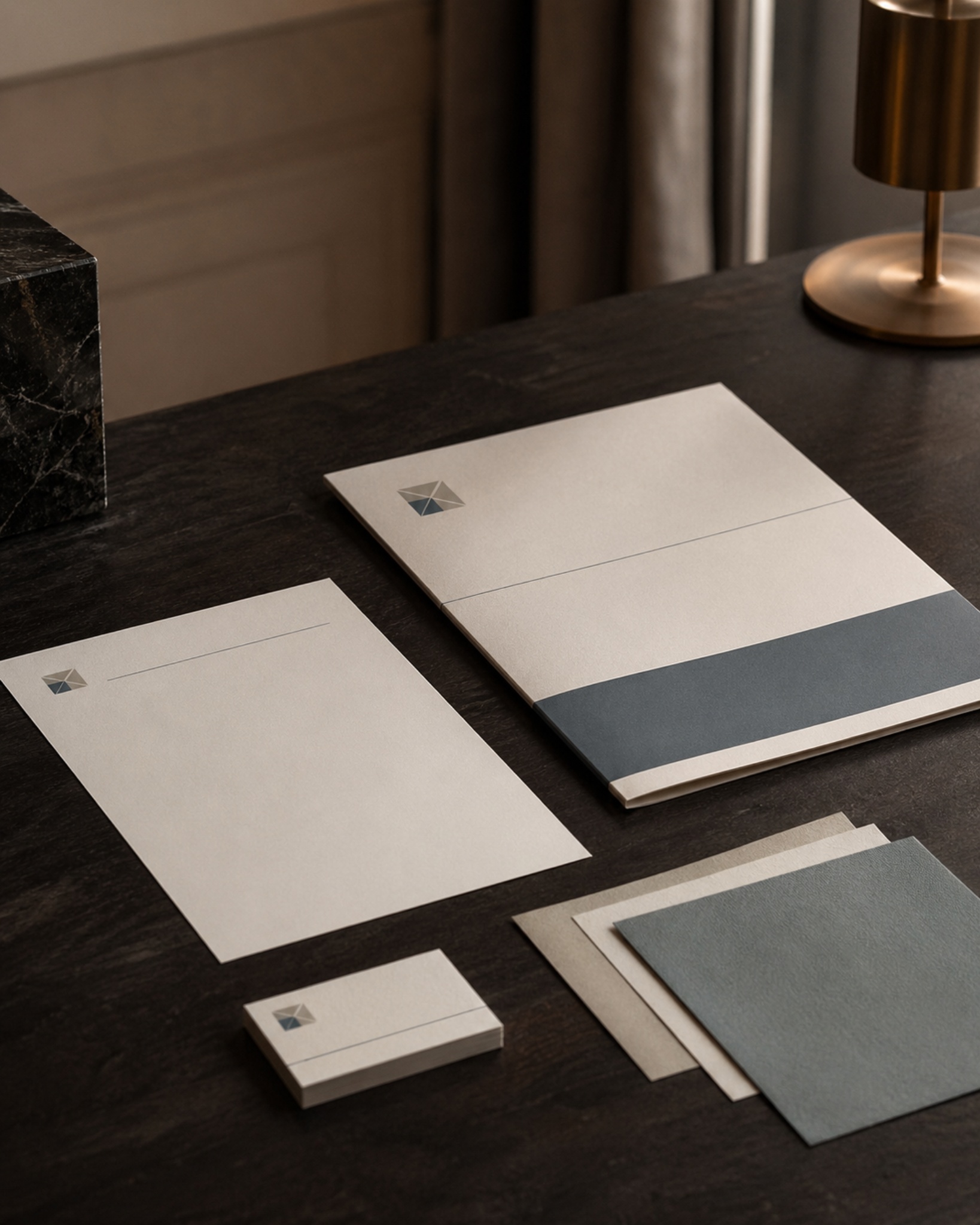
What they see is the first signal. A website. A sign. A proposal. A business card passed across a table. And in that first moment, before anything has been said, they are forming an impression.
When the identity no longer reflects the quality behind the business, that impression can work against everything the company has spent years building.
It is not that the business looks bad. It is that it may look smaller, less organized, or less established than it actually is. The issue is not a lack of value. The issue is that the value is no longer immediately visible.
Why This Matters More Than It Used to
A generation ago, a business's reputation often spread through conversation. A referral came because someone knew someone, and personal trust carried most of the weight.
That still happens. But it no longer happens alone.
Today, before someone picks up the phone or sends an inquiry, they have already looked. They have visited the website. They have seen the logo on a vehicle or storefront. They have formed an opinion.
Visual fluency among ordinary consumers has increased quietly but significantly over the past decade. People are not necessarily designers. But they notice when something looks considered — and when it does not.
Businesses that depend on trust — professional service firms, family-built companies, established contractors, private practices — are particularly exposed to this shift. When the identity does not reflect the reputation, the business is often working harder than it should to close that gap in conversation.
When Good Service Is Not Enough on Its Own
There is a quiet assumption many established business owners carry: that if the work is good enough, the presentation matters less. That quality speaks for itself.
And for a long time, that may have been true. A strong enough reputation can carry a business for years, even when the identity has not kept up.
But referrals have limits. They bring in people who are already partially convinced. They do not reach the clients who find the business through a website, a social profile, or a passing glance at a sign. And that first impression is almost always a visual one.
What Growth Actually Looks Like
The businesses that navigate this well are not the ones that panic and redesign everything. They are the ones that take an honest look at where perception and reality have started to separate.
They do not abandon their history. They do not try to look like a startup or chase whatever visual style feels current this year. They refine what they have built — making it cleaner, clearer, and more consistent — so it finally reflects the quality that was always there.
A logo that has served a business well for fifteen years may not need to be replaced. It may need to be refined — made cleaner, more precise, more intentional.
A website that was built in a different chapter of the company may not need to be reinvented from scratch. It may need to reflect where the company actually is today.
A brand identity does not need to reinvent what a business is. It needs to reflect what the business has become.
A Reflection Worth Taking
Look at your website, your business card, your proposals, your signage, and your social profile. Then ask yourself honestly: does what you see reflect the quality of what you do?
If the answer is uncertain, that uncertainty is worth paying attention to.
If a business has grown but its identity has not caught up, the first step is not to change everything. It is to look carefully at where perception and reality have started to separate.
Sometimes the work is already strong. The trust is already there. The reputation has already been earned.
The identity simply needs to speak from the same level.